Why Your Best Lead Just Called Your Competitor Instead
Somewhere in your service area right now, someone needs what you do. Their water heater died, their roof is leaking, their AC quit in July. They’re not browsing — they’re panicking, phone in hand, ready to hire whoever answers first.
They Google your trade. They click into three or four websites. And more often than not, here’s what happens: no chat widget, no way to book, a phone number that isn’t even clickable. So they do the only thing left — they either give up, or they call the next name on the list.
That’s not a hypothetical. That’s the exact experience most contractor websites deliver every single day, and it’s the single biggest reason good businesses lose jobs to worse ones. Not because the competitor does better work. Because the competitor’s website made it easier to say yes.
If you run a home service business — roofing, plumbing, HVAC, landscaping, detailing, whatever your trade — this is the gap that’s quietly draining revenue out of your business every week. And it’s fixable. Not with a prettier website. With a system.
The problem isn’t your work. It’s your response time.

About 60% of small business phone calls go unanswered. Not because owners don’t care — because they’re on a roof, under a sink, or driving to the next job. But the customer on the other end doesn’t know that. They just know nobody picked up, so they move on.
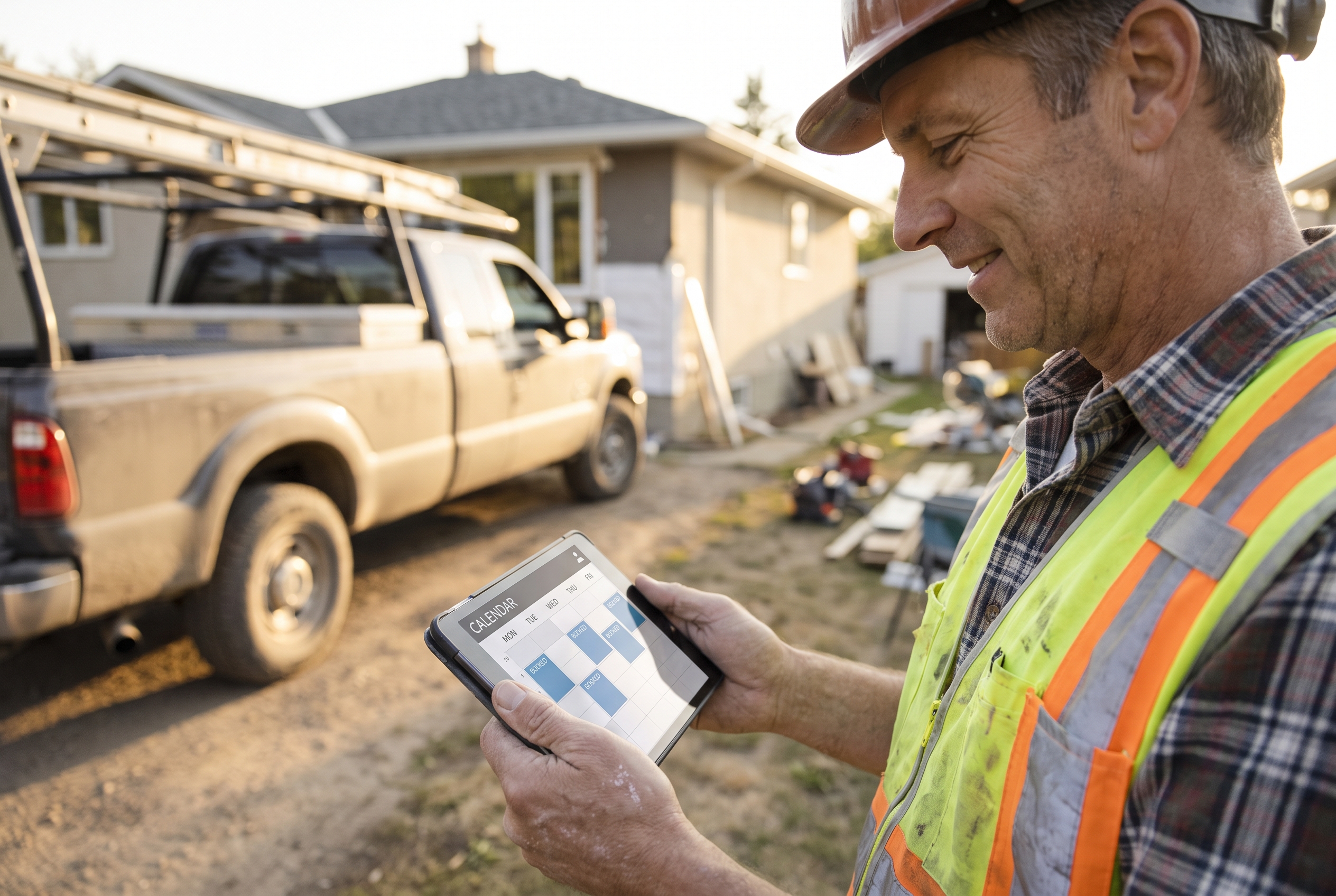
The businesses winning right now aren’t necessarily the best at the trade. They’re the ones who respond first. A booking calendar on the site. A text that fires the second a call is missed. A phone number you can actually tap. That’s the difference between a lead that turns into a job and a lead that turns into someone else’s job.
That’s what a real marketing system fixes — not by getting you more traffic, but by making sure you never lose the traffic you already have.
What an actual system looks like
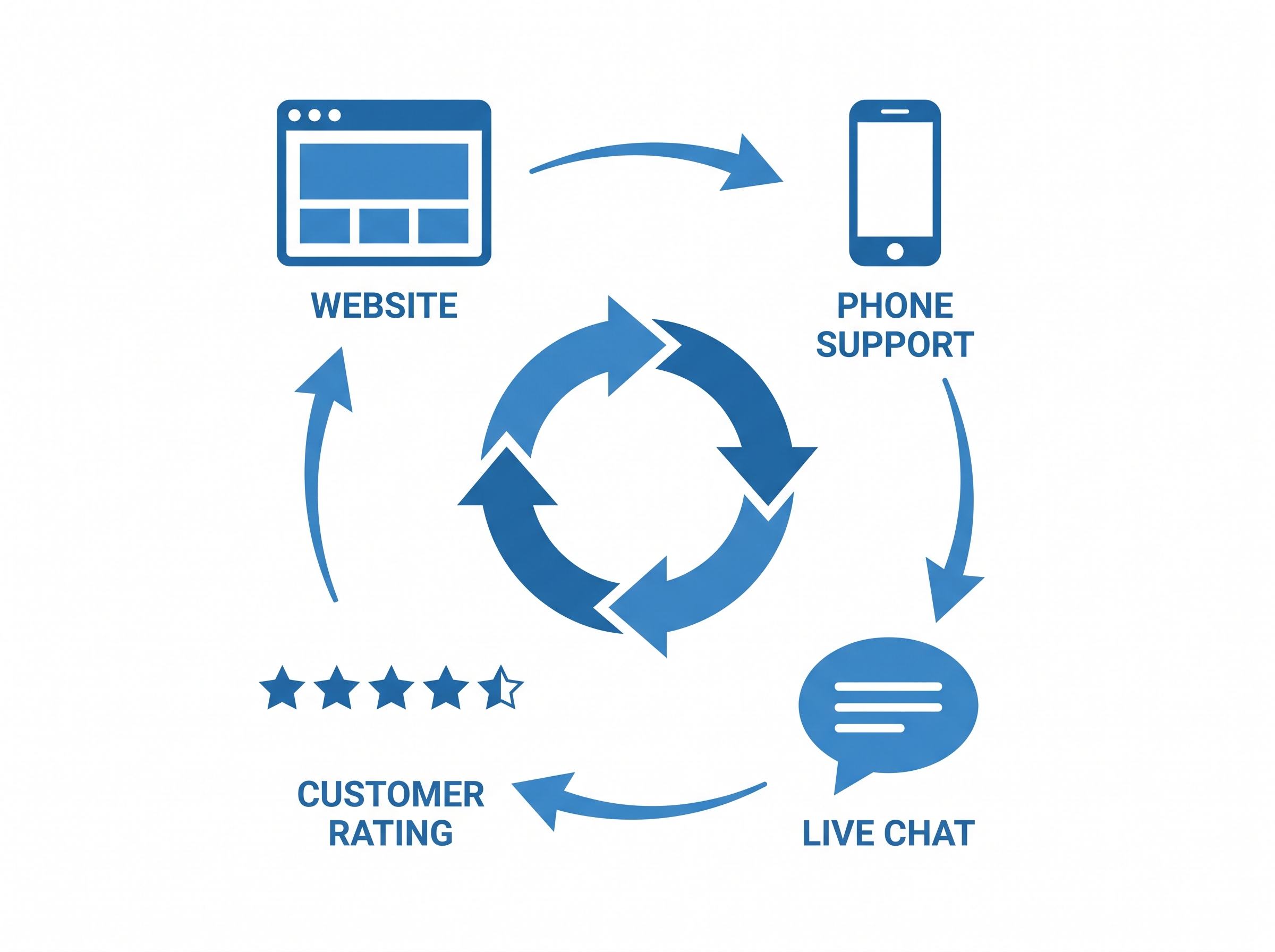
A one-time website is a product. What you need is a system — something that keeps working after the initial build, that gets stickier the longer you use it, and that turns every customer interaction into another opportunity instead of a dead end. Here’s what that looks like in practice.
A conversion-built website. Not a digital business card — a site built to actually book work. SEO-optimized, fast, with live chat on every page, and a clear path from “I found you on Google” to “I’m on your calendar.” This is the front door. Everything else in the system either drives traffic here or catches the leads it generates.
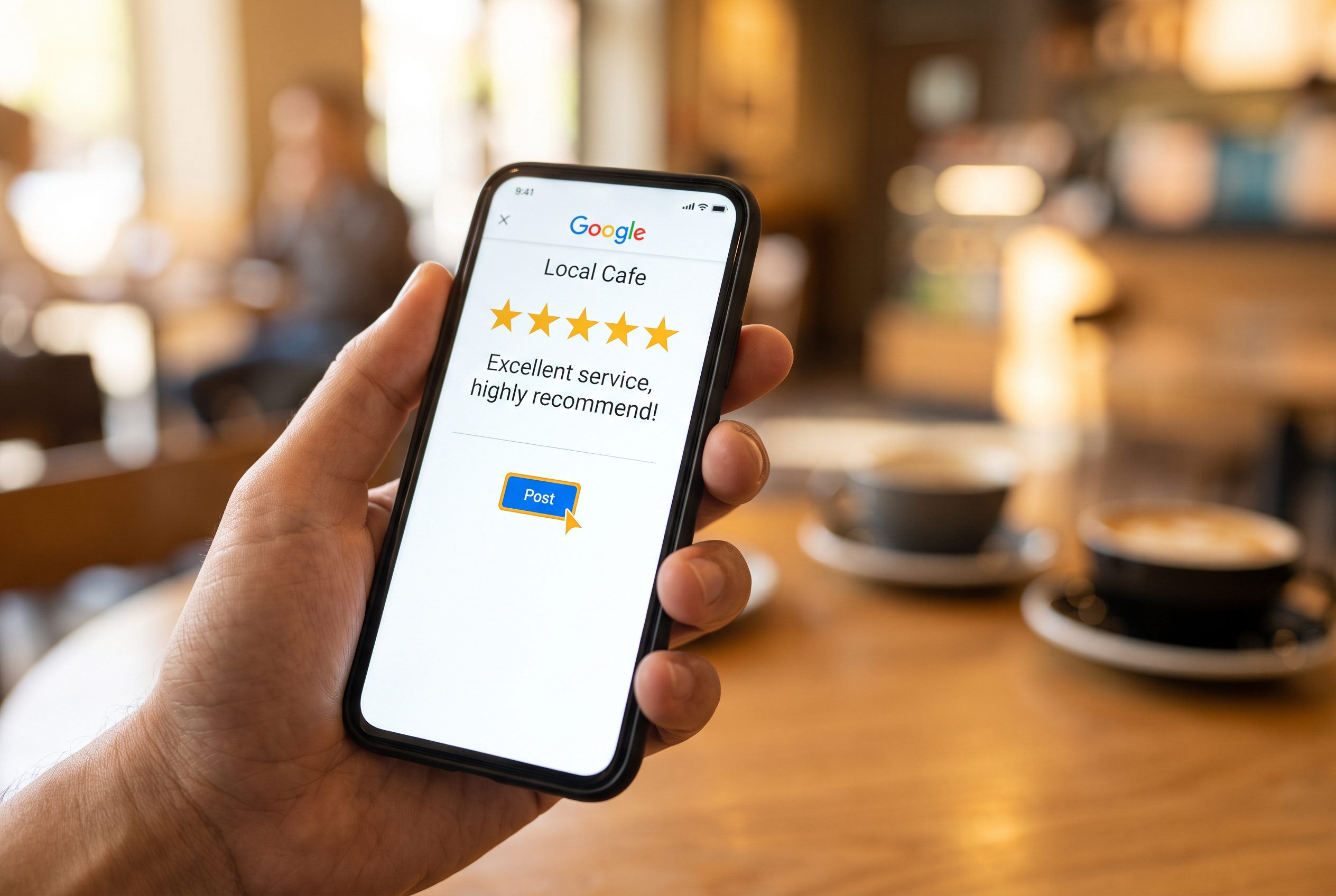
A 5-star review funnel. Most contractors are terrified to ask for reviews, because they’re afraid of the bad ones showing up publicly. This system solves that: happy customers get routed straight to a public review link. Customers who had a rougher experience get a private feedback form instead — so you still hear about problems, but they don’t end up as a public 2-star review costing you the next ten leads. Customers who don’t respond right away get reminded automatically until they do.
Auto call text-back. The moment a call goes unanswered, the caller gets an instant text: something like “Sorry I missed you — mid-job right now, here’s a link to book directly.” That single automation alone recovers a meaningful chunk of the leads that would otherwise vanish the second nobody picks up.
A business phone number built into the system. Every call and text runs through one dedicated line connected to your CRM, so nothing gets lost in a personal cell phone, and every conversation is tracked, logged, and follow-up-able.
AI review responses. Every review that comes in — good or rough — gets a thoughtful, on-brand response automatically. Prospective customers read reviews and how a business responds to them. A business that replies to every review looks like it’s actually run by someone who cares. Most of your competitors aren’t doing this at all.
Reviews turned into social proof. Every new 5-star review gets automatically converted into a social post for your Google Business Profile — complete with your phone number and website. That means your review engine isn’t just protecting your reputation, it’s actively generating fresh content and fresh visibility without you lifting a finger.
A remarketing campaign. A few weeks after a job wraps, past customers get a friendly check-in text with a small discount and an easy ask to pass it along to friends and family. This does two things at once: brings past customers back for repeat work, and turns them into a referral source without you ever having to ask directly.
Database reactivation (DBR) campaigns. Every contractor has a graveyard of old customers sitting in a spreadsheet or a phone contacts list — people who used you once and never heard from you again. A DBR campaign reaches back out to that entire list at once. Businesses running these regularly turn stagnant customer lists into a steady stream of reviews and repeat bookings, often from names they’d completely forgotten about.
Why a $300/month system beats a $3,000 website
There’s a version of this that a lot of contractors have already tried: pay a freelancer or agency a few thousand dollars for a one-time custom website. It looks nice for a month. Then it sits there. No follow-up system, no review engine, no way to bring past customers back — just a digital brochure that slowly goes stale while your competitors’ sites keep working.
Compare that to a system priced monthly, in the $200–$500 range, that’s actively working every single day: catching missed calls, protecting your reputation, pulling old customers back into your pipeline, and posting fresh social proof without you doing anything. The website is genuinely the smallest part of the value. It’s the thing customers see. Everything wrapped around it is what actually makes the phone ring.
This is also why the pricing makes sense from the customer’s side, not just yours. A contractor doesn’t hesitate to pay a few hundred dollars a month once they understand it’s not “a website subscription” — it’s a system that’s directly responsible for jobs they’d have otherwise lost to a competitor who simply answered first.
Why this compounds instead of resetting
Here’s the part most people miss: none of these pieces work in isolation. The website generates the lead. Auto call text-back keeps you from losing it. The review funnel protects your reputation while quietly building it. The social posts keep bringing new eyes back to the website. The remarketing and reactivation campaigns turn every past customer into either a repeat job or a referral.
It’s a loop, not a funnel — and every loop that runs makes the next one a little stronger. A contractor running this system for six months isn’t just getting more leads than they were on day one. They’re compounding: more reviews, more visibility, more repeat business, more referrals, all from the same customer base they already had.
That’s the actual value of a system over a one-off website. A website you pay for once and forget about doesn’t get better with time. A system does.
What this actually means for your business
If you’re a contractor reading this, the question isn’t whether you need a website. Almost everyone has one. The question is whether that website — and everything connected to it — is actually built to capture the customer standing in front of it, phone in hand, ready to hire whoever answers first.
Most aren’t. And that gap is exactly where the next job on your calendar is either won or lost.
If you want to see what this system looks like running on an actual contractor business, reach out and we’ll walk you through it. That’s what we build, every time, for every client — no guesswork, no one-off websites left to go stale. Just a system that keeps working long after the first install.
Ready to see it in action? Get in touch with GTI Agents.